From Hunting Tradition to Sustainable Conservation in Eswatini

The lion, symbol of our King (Ingwenyama), and the matriarch elephant, symbol of our Queen Mother (iNdlovukazi), both appear on the Eswatini national crest. During the colonial period, both species became locally extinct.

It was unthinkable that neither of these important animals was present in the then Swaziland at the time of independence from the British Empire. Their absence provided an additional reason for restoring both species to Swaziland. The elephant returned in 1986 and the lion in 1994, both from Kruger National Park. Hlane Royal National Park is now home to both lion and elephant, although it is too small to support free-roaming populations of these species.

Butimba: The Royal hunt and its significance

Hlane Royal National Park plays an important role in the cultural heritage of the Kingdom of Eswatini. It provides an overflow of animals from the core conservation area of the park into an adjoining dispersal
Different species of game carried by regiments

buffer zone, which is the traditional Royal hunting ground of the nation. It is in this area that the Butimba, the Royal Hunt, is occasionally called by the King, and every liSwati (the demonym used to describe a person from Eswatini) is welcome to participate.

Butimba literally refers to a hunting expedition. Conservation literature on Swati culture describes the Royal Hunt as a tradition that has been practiced for centuries, during which the King and his regiments hunted game for the royal household and the nation. The Butimba also provides game meat, skins and other materials used in traditional ceremonies and attire.

By 1966, however, wildlife populations had become so depleted that the traditional hunt had lost much of its practical purpose. This created a fundamental challenge: how could a hunting tradition be maintained when there was almost nothing left to hunt?

Conservation intervention

Published conservation history records that King Sobhuza II (1921-1982) recognized the cultural importance of the Royal Hunt and ordered the protection of the Hlane area, with Ted Reilly entrusted with its stewardship. The underlying principle was essentially to protect the breeding stock so that there would be a surplus in the future. This philosophy transformed the relationship between Butimba and wildlife.

The protection of Hlane allowed wildlife populations to recover. Today, Hlane is Eswatini’s largest protected area, and Big Game Parks manages it on behalf of the King and the nation. The park contains elephants, rhinoceroses, lions, leopards and numerous other wild species. Butimba survived because the wildlife survived. Wildlife conservation therefore became a means of conserving the cultural institution itself.

Interdependence of culture and nature
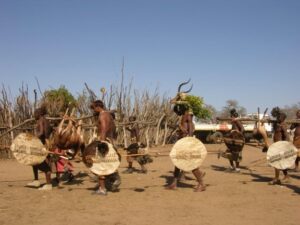
Regiments return with game from hunting assignment.

The modern Butimba is therefore based on the principle that there must be a healthy wildlife population from which a controlled harvest can be made without destroying the population.

The King has traditionally been associated with the welfare of the Kingdom and its people. Consequently, the Royal Hunt places the King and the traditional age regiment, known as Libutfo, directly within the landscape from which food and other natural resources are obtained. This is significant because Swati culture has historically been closely connected to the natural environment. Eswatini’s biodiversity strategy specifically identifies Butimba as an example of the country’s socio-cultural relationship with biodiversity. The biodiversity strategy makes an important observation: if the antelope species in the hunting area were exterminated, Butimba itself would eventually disappear. In other words, the survival of the cultural practice depends on the survival of the ecosystem.

Kushisa tikhotsa: Managing the habitat

“Kushisa tikhotsa” otherwise known as controlled burning, is an important part of the ceremony. Its purpose is to remove old vegetation under controlled conditions so that new vegetation can grow and provide nutritious grazing for wildlife. Today’s ceremony can therefore be understood as having two closely connected dimensions: “Kushisa tikhotsa”, which involves managing the habitat, and controlled hunting, which involves managing the wildlife population. Together, these practices are intended to support a sustainable ecosystem. Modern Butimba can consequently be understood as a ceremony involving wildlife, environmental conservation, and the relationship between people and nature, rather than hunting alone.

Conclusion: Preserving Butimba through conservation

There is a fascinating paradox at the heart of Butimba’s history: hunting nearly destroyed the wildlife resource on which the hunt depended. As game numbers declined, Butimba lost much of its practical foundation. The response was not necessarily to abandon the tradition permanently. Instead, conservation created the conditions under which the tradition could survive and develop a new ecological dimension.

The history of Butimba therefore demonstrates a close relationship between culture and conservation. The survival of the Royal Hunt depends on the survival of wildlife and its habitat, while the continuation of the tradition provides a cultural reason to value and protect that natural heritage.
From Communities to Collective Action: Botswana Takes a Historic Step to Strengthen CBNRM

The Ngamiland Council of Non-Governmental Organisations (NCONGO), in collaboration with its partners; Community Leaders Network of Southern Africa (CLN), Ministry of Environment and Tourism and North West District Council – Ngamiland CBRNM Forum, proudly concluded the 2026 Community-Based Natural Resource Management – CBNRM Forum, marking a significant milestone in Botswana’s community conservation journey.

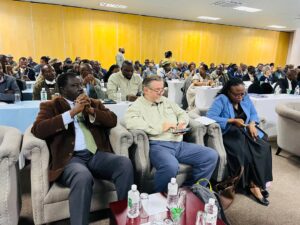
Held in Maun, the two-day forum brought together more than 200 participants from across Botswana, including representatives of Community-Based Organizations (CBOs), Community Trusts, governmentinstitutions, civil society organizations, traditional leaders, conservation practitioners, development partners, and private sector stakeholders. The forum also welcomed delegates from Zambia (Zambia CBNRM Association), Zimbabwe (Campfire), and Namibia (Namibian Association of CBNRM Support Organisations – NACSO), who shared valuable experiences and lessons from their well-established national CBNRM structures, providing an opportunity for regional learning and collaboration.

The forum was designed to strengthen dialogue on community-led natural resource management, promote knowledge exchange, and identify practical solutions to challenges affecting rural communities that depend on natural resources for their livelihoods. Through presentations, panel discussions, and interactive engagements, participants explored opportunities to enhance governance, strengthen community institutions, improve benefit-sharing mechanisms, and ensure that communities remain central to the management of Botswana’s natural resources.

A Landmark Achievement

The defining outcome of the forum was the establishment of the National CBNRM Association, a long-awaited and transformative platform designed to bring together Botswana’s CBNRM institutions under a shared national voice. Beyond creating a formal structure for collaboration, the Association represents an important step towards strengthening community participation, institutional coordination, and collective advocacy in the governance

of Botswana’s natural resources. The Association represents a significant step towards improving coordination among community organizations, strengthening advocacy, promoting good governance, and creating a unified platform through which communities can engage government, development partners, conservation organizations, and the private sector on matters affecting community-based natural resource management.

To lead this important process, forum delegates elected a 10-member Interim Committee representingCBOs from across Botswana. The committee has been mandated to establish the Association over the next twelve months.

The Road Ahead

The Interim Committee has been entrusted with several key responsibilities, including:

  • Drafting the Constitution of the National CBNRM Association.
  • Preparing and submitting the Association’s registration documents.
  • Developing governance and corporate governance frameworks.
  • Designing a resource mobilization strategy to support the Association’s sustainability.
  • Developing a communication and stakeholder engagement strategy.
  • Preparing a report with recommendations from the National CBNRM Forum for presentation to Government and other stakeholders.
  • Organising and convening the inaugural General Assembly to adopt the Constitution and elect the first National Executive Committee.

These deliverables will establish a strong institutional foundation for a sustainable and nationally representative Association capable of advancing the interests of CBNRM across Botswana.

A New Chapter for Community Conservation

For many years, Community Trusts and CBOs have made invaluable contributions to conservation, biodiversity protection, eco-tourism, and rural livelihoods. However, the absence of a unified national body has limited opportunities for coordinated advocacy, peer learning, and collective representation.

The National CBNRM Association marks the beginning of a new chapter, one in which communities will have a stronger national platform to share experiences, influence policy, promote good governance, and collectively advance sustainable natural resource management.

The Association is expected to strengthen collaboration among CBNRM practitioners while fostering partnerships that support community empowerment, biodiversity conservation, and inclusive socio-economic development.

NCONGO’s Commitment

As the Secretariat of the forum, NCONGO remains committed to supporting community-led conservation initiatives and strengthening the capacity of CBOs across Botswana. The successful convening of the forum demonstrates the power of collaboration and reinforces the importance of creating platforms where communities can shape the future of natural resource governance.

NCONGO extends its sincere appreciation to all participants, speakers, partners, funders, government representatives, and regional delegates, whose contributions made the forum a resounding success.

The Association will be more than the creation of a new institution; it will be the beginning of a united movement that will empower communities, strengthen conservation efforts, and ensure that Botswana’s natural resources continue to benefit present and future generations.

Together, we are building better communities.

Evidence Over Emotion

Why a UK Hunting Trophy Import Ban will Harm African Communities and Wildlife:

August 2025

In June 2024, the Labour Party pledged in its election manifesto to introduce a ban on the import of hunting trophies to the United Kingdom. Now elected to government, that commitment could soon shape legislative proposals with far-reaching implications for international conservation efforts, local livelihoods, and Indigenous Peoples and Local Communities in Africa. This report has been compiled to inform that moment.

While the most recent legislative attempt — a Private Member’s Bill introduced by Conservative MP David Reed — failed to pass, the manifesto commitment signals continued political interest in the issue. We offer this document not in response to a specific bill, but in anticipation of one. Our goal is to ensure that any future policy debate is guided by science, inclusive of affected voices, and rooted in the realities of conservation on the ground — not just the sentiments of distant publics.

Evidence over Emotion Aug 2025

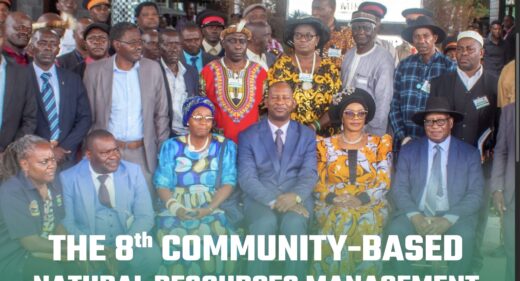
Front cover of the report showing delegates posing for the camera.

Zambia’s 8th Community-Based Natural Resources Management Annual Conference

This conference in Lusaka, Zambia on 9-11 December 2024 brought together community leaders, government officials, policymakers development partners and academics to discuss Community-Based Natural Resources Management in Zambia. The discussions and resolutions made during this conference include strengthening community rights, mobilising resources, improving transparency and accountability, increasing data collection and management, advocacy, and many more. Read the full report here…

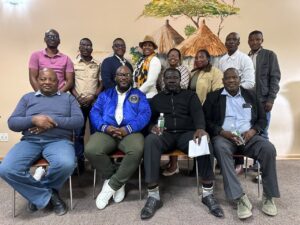
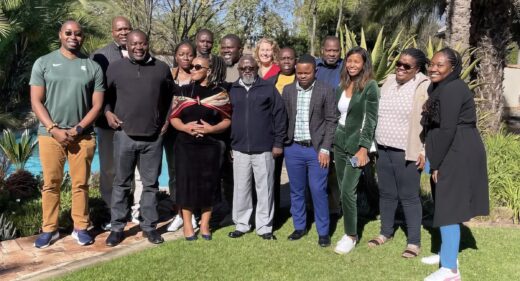
Group photo of the workshop participants.

Community Leaders Network of Southern Africa Strategy Workshop Report

In May 2023 the Community Leaders Network of Southern Africa (CLN) convened in Johannesburg, South Africa, to formulate their development strategy for the next six years. The workshop served as a platform for the CLN Board and key decision makers to collaboratively develop the framework of the strategy and a Theory of Change. Download the report here: (Africa Strategy Workshop Report.pdf)


CLN Annual Report 2022

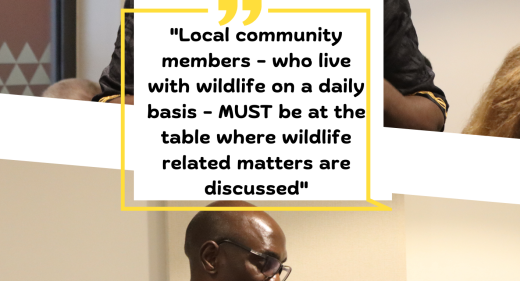
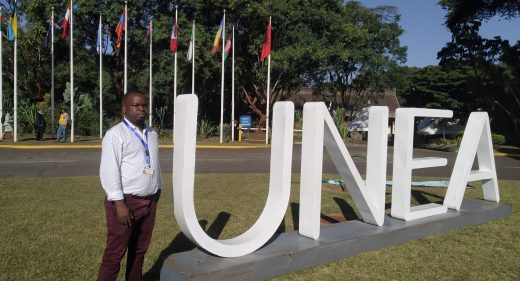
The Community Leaders Network of Southern Africa (CLN) has participated in various national, regional and international fora during the year 2022, leaving significant impacts at every one of them. All these activities are in line with CLN’s mandate of ensuring that community members who actually live with wildlife on a daily basis are consulted in all decisions regarding management of wildlife and other natural resources. Community members participated at events such as CITES CoP19, CBD CoP15, APAC, UNEA 5 – amongst others.

Detailed report of activities can be accessed here: CLN Annual Report 2022